I used to think walking during a run meant I was failing.
After all, I had been a runner in high school. I ran the mile and the two-mile. Later, I ran the Army two-mile. Back then, the expectation was simple:
“It’s only a mile or two. Just run it.”
No walking.
No slowing down.
No modifications.
But that was decades ago.
There are a lot more miles on my feet now.
I’m almost 60 (and yes, that was hard to type), and I had to learn that running in my 50s looks very different than it did in my teens or twenties.
Then life happened.
A big Army truck met one little Judi foot.
The Navy doctor basically looked at me and said,
“I can’t fix it, and if you don’t use it, it’s only going to get worse.”
Not exactly the news I was hoping to hear.
When I decided I wanted to start running again, I knew I couldn’t train the way twenty-year-old Judi had. I needed a smarter approach.
That’s when I discovered the run/walk/run method through the runDisney website while preparing for my very first race. I bought Jeff Galloway’s book, The Run Walk Run Method, and devoured it.
For the first time, I realized something.
I didn’t have to run every single step.
I just had to keep moving forward.
When I stood with my pacing group before my first runDisney half marathon, I knew I could finish.
And that was the moment everything changed.
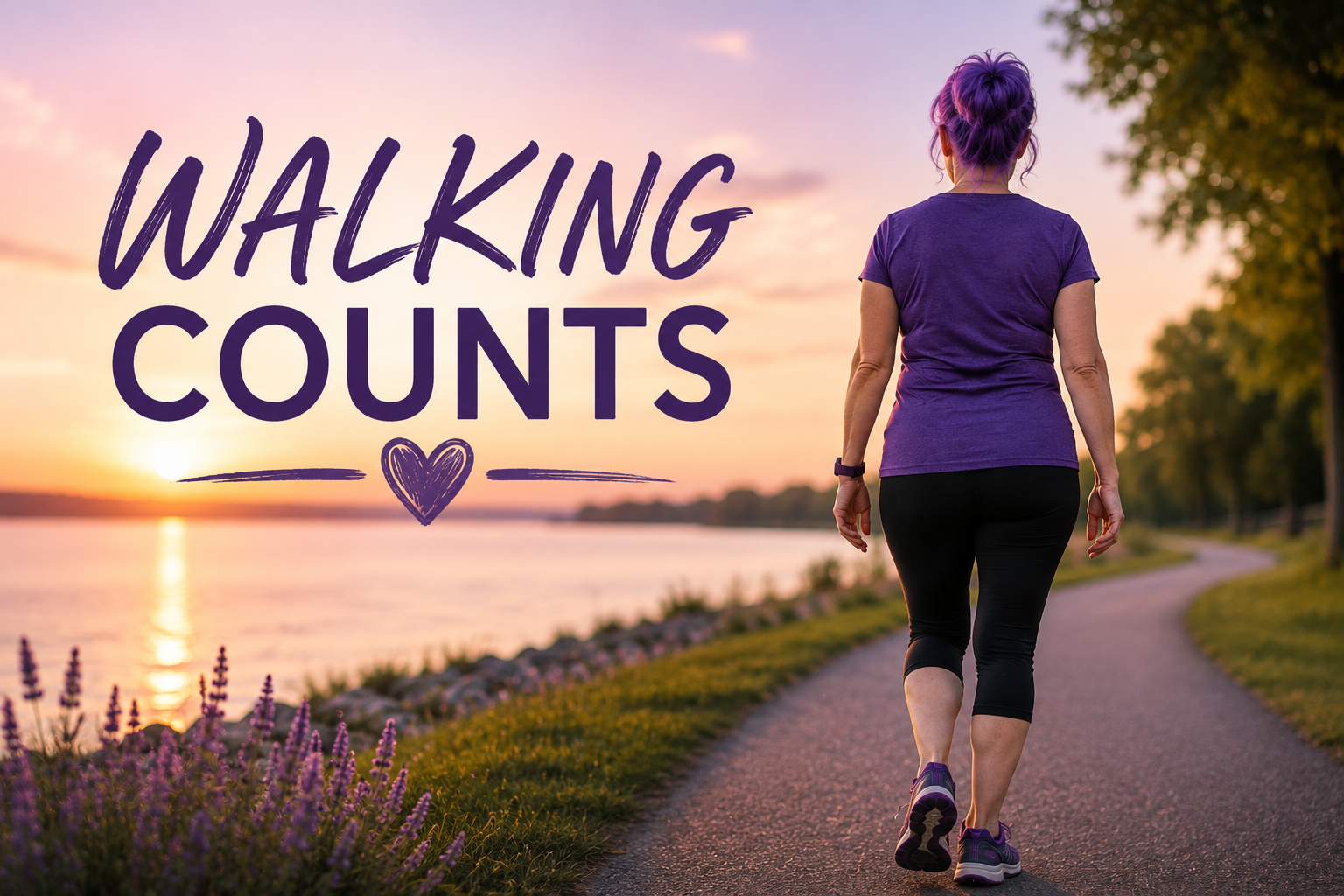
Walking counts.
Recovery counts.
Doing what works for your body counts.
If you’re just getting started, you may also enjoy my article on How to Start Running After 50.
The Myth That Walking Doesn’t Count
Why do so many of us believe walking somehow “doesn’t count?”
Maybe it’s because that’s what we’ve always been taught.
Maybe it’s because social media tells us we should always push harder, run farther, and never slow down.
Or maybe we’ve convinced ourselves that if we aren’t running every step, somehow we’ve failed.
I know I believed that.
If I had to walk, I thought I wasn’t really running.
But nothing could be further from the truth.
Walking is often where fitness journeys begin.
Walking builds endurance.
Walking builds confidence.
Walking gives your body time to adapt to what you’re asking it to do.
Sometimes, a walk break is exactly what allows you to come back tomorrow and train again.
Jeff Galloway has spent years teaching the run/walk/run method, and thousands of runners—including me—have crossed finish lines because of it.
The method helped me complete my first runDisney half marathon.
It helped me recover better.
It helped me stay healthy.
Most importantly, it reminded me that fitness isn’t about doing everything the hardest way possible.
It’s about finding a way that works for your body—and sticking with it.
Don’t believe the myth.
Walking counts.
How Walking Helped Me
When I started training for runDisney, I knew I needed to be realistic.
The last thing I wanted was to spend all that money on a race weekend, injure myself during training, and never make it to the starting line.
The run/walk/run method gave me confidence.
Walking helped me build endurance.
Walking helped me recover.
Walking kept me moving.
Something funny happened along the way.
As my endurance improved, so did my pace.
I know that sounds backwards.
You’d think stopping to walk would make you slower.
For me, it did the opposite.
Because I wasn’t exhausting myself every workout.
I recovered better.
I could show up for my next training session.
And that consistency made all the difference.
I also learned that walking doesn’t only matter on training days.
When I’m traveling, I may not always have time for a full workout.
That doesn’t mean I stop moving.
A walk still counts.
A walk keeps me on track.
A walk is still progress.
One of my favorite memories happened after Princess Half Marathon Weekend.
Knowing I was planning to run Springtime Surprise just a month later, my goddaughter looked at me as we headed into the parks and said,
“Turn on your tracker. This absolutely counts.”
She was right.
Those park miles count.
Those park steps count.
They build endurance.
They build strength.
They keep you moving.
Walking may not look impressive on Instagram.
But walking has helped me finish races, recover better, stay active, and continue chasing goals that matter to me.
I’d call that a win.
Walking Is Often More Sustainable
I could spend this section talking about the science.
Believe me, hubby already thinks I’m enough of a nerd.
But honestly?
This isn’t really about the science.
It’s about the results.
Did walking help me reach my goals?
Absolutely.
My sister likes to remind me that running is going to ruin my knees.
Meanwhile, I’m pushing 60 and still operating on all my original equipment.
I think part of that is because I learned to train smarter instead of harder.
Walking is:
- Lower impact
- Easier to recover from
- Less intimidating
- More sustainable
- Easier to stay consistent with
And consistency is where the magic happens.
You can usually walk much longer than you can run, especially when you’re just getting started.
Let’s compare two different approaches.
Scenario One
You decide you’re going to run the entire mile without stopping.
Maybe you make it.
Maybe you don’t.
Either way, you come home exhausted, sore, discouraged, and thinking,
“I never want to do that again.”
Scenario Two
You run for 30 seconds.
Then you walk for 60 seconds.
You repeat that until you’ve finished your mile.
You feel tired.
But you also feel successful.
You realize maybe this isn’t impossible after all.
Maybe you could do it again tomorrow.
Maybe you even enjoyed it.
I know which scenario I’d choose.
I’m firmly Team Scenario Two.
Because the workout you can repeat is always better than the workout that makes you quit.
The Secret Is Consistency
If there’s one lesson I’ve learned about fitness after 50, it’s this:
Consistency beats intensity. Every single time.
A 20-minute walk is better than a completely skipped 60-minute run.
Why?
Because you’re still showing up.
You’re still moving forward.
You’re still proving to yourself that your goals matter.
Some days you feel amazing.
Some days you don’t.
Some days the weather is terrible.
Some days life gets in the way.
Some days the couch sounds a whole lot more appealing than your walking shoes.
Trust me.
I’ve had every one of those days.
The difference is that walking gives me another option.
Maybe today isn’t the day for speed work.
Maybe today isn’t the day for a long run.
Maybe today isn’t the day you set a personal record.
But maybe today is the day you take a 20-minute walk.
And that still counts.
Every time you choose movement instead of doing nothing, you build momentum.
You build confidence.
You build the habit of keeping promises to yourself.
That little voice asking,
“Do you really want to work out today?”
Never completely disappears.
I still hear it.
The goal isn’t to silence it.
The goal is to keep moving anyway.
Walking helps me do that.
Walking helps me stay consistent.
And consistency is what gets us to the finish line.
Final Thoughts
Funny thing about life…
You have to start where you are, not where you wish you were.
When I started running again in my 50s, I thought success meant running every single step.
What I eventually learned was that success means finding a way to keep going.
For me, that way was walking.
If walking is what helps you keep moving toward your goals, then walking is exactly what you should be doing.
Those fitness influencers on Instagram aren’t living your life.
They’re not dealing with your knees, your schedule, your injuries, or your starting point.
Your journey is uniquely yours.
Choose the path that keeps you moving.
Show up for yourself.
Keep moving forward, even when it feels slow.
Because some days the biggest victory isn’t setting a personal record.
It’s simply refusing to quit.
And if all you did today was take a walk…
That counts.
Walking counts.
1 thought on “Walking Counts: Starting Running After 50”